
Stellen Sie sich vor, in Ihrem Kopf gäbe es einen Rauchmelder. Bei vielen Menschen, die unter chronischem Stress, Angstzuständen oder Depressionen leiden, ist dieser Melder jedoch falsch eingestellt. Er schlägt nicht nur Alarm, wenn es brennt, sondern bereits, wenn jemand eine Kerze anzündet oder die Heizung hochdreht. Dieser biologische Rauchmelder ist die Amygdala.
Wenn die Amygdala feuert, übernimmt das Stammhirn das Kommando. Logisches Denken rückt in den Hintergrund, der Körper bereitet sich auf Flucht oder Kampf vor. Während wir als erste Reaktion immer „einfrieren“ bzw. „erstarren“. Das hat damit zu tun, dass uns das sogenannte Reptiliengehirn seit Urzeiten am Leben hält. Denn Raubtiere gehen auf Bewegung. Was sich nicht bewegt, wird nicht angegriffen, da es nicht wahrgenommen wird. Das Problem: In unserer modernen Welt können wir weder vor dem Kontostand flüchten noch gegen die existenzielle Zukunftsangst kämpfen. Wir bleiben erstarrt, während unser System auf Hochtouren läuft.
Doch wir besitzen eine Fernbedienung für diesen Zustand. Sie liegt nicht in der Apotheke, sondern direkt unter unseren Rippen: der Atem.
Die Neurobiologie der Ruhe: Warum Atmen kein „Esoterik-Kram“ ist #
Lange Zeit wurde bewusstes Atmen in die Ecke der Wellness-Esoterik geschoben. Doch die moderne Neurowissenschaft hat das Blatt gewendet. Wir wissen heute, dass die Atmung der einzige Teil unseres vegetativen Nervensystems ist, den wir bewusst steuern können.
Das Tor zum Nervensystem: Der Vagusnerv
Der Vagusnerv ist der Hauptakteur des Parasympathikus – jenem Teil des Nervensystems, der für „Rest and Digest“ (Ruhen und Verdauen) zuständig ist. Er zieht sich vom Gehirnstamm bis tief in den Bauchraum.
Beim Einatmen schlägt das Herz etwas schneller, da das Zwerchfell nach unten drückt und das Herz leicht komprimiert wird. Um den Blutfluss stabil zu halten, drosselt das Gehirn kurzzeitig die Vagus-Aktivität. Doch beim Ausatmen passiert das Magische: Das Herz bekommt wieder mehr Raum, und der Vagusnerv sendet Signale an den Herzschrittmacher, das Tempo zu drosseln.
Die Formel der Ruhe: Wer länger ausatmet als einatmet, schickt eine direkte biochemische Botschaft an das Gehirn: „Wir sind in Sicherheit.“
Die Amygdala-Dämpfung
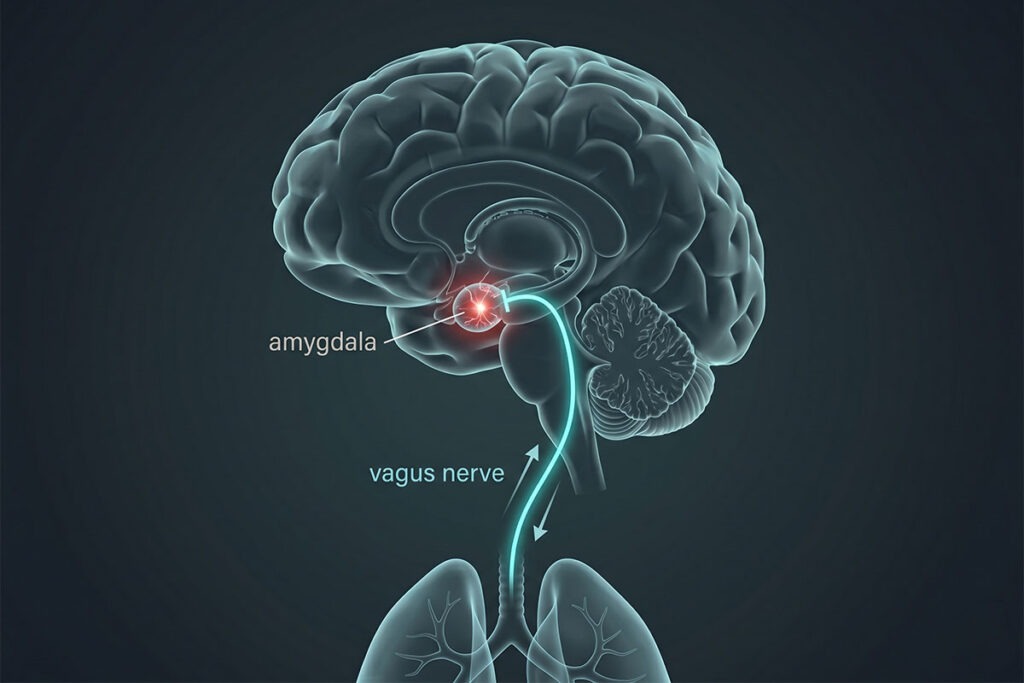
Studien der Stanford University (u.a. von Dr. Andrew Huberman) zeigen, dass gezielte Atemmuster die Aktivität im präfrontalen Cortex erhöhen und gleichzeitig die Amygdala dämpfen. Wir schalten das Angstzentrum buchstäblich leiser. Dies ist keine psychologische Einbildung, sondern messbare neuronale Regulation.
Interozeption: Die Kunst, den eigenen Körper zu lesen #
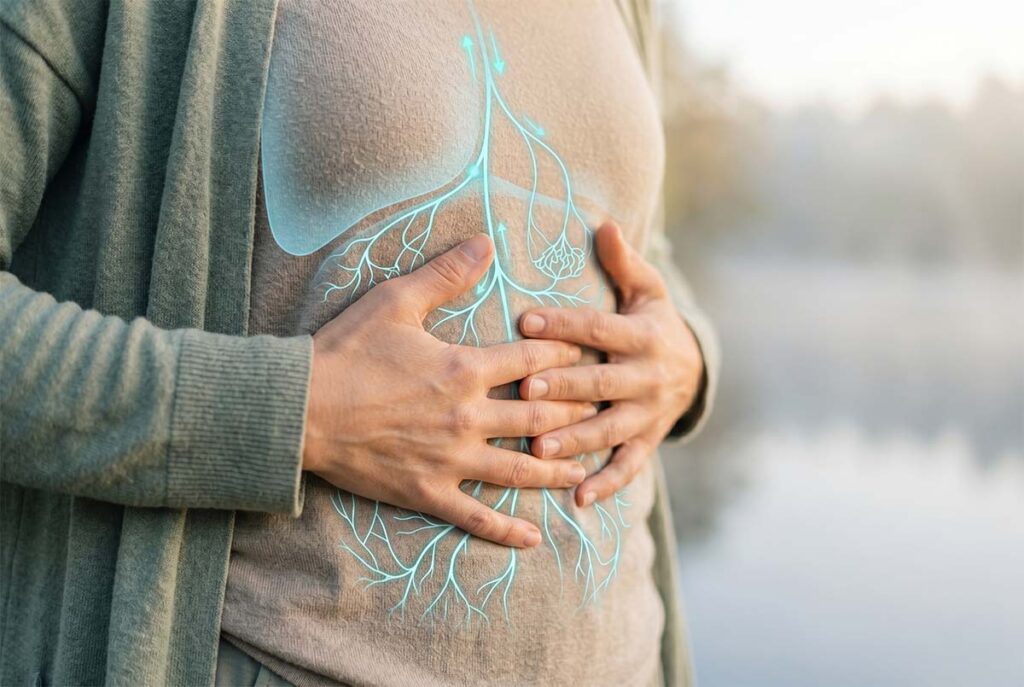
Menschen mit psychischen Belastungen leiden oft unter einer gestörten Interozeption. Das ist die Fähigkeit des Gehirns, Signale aus dem Inneren des Körpers (Herzschlag, Muskelspannung, Atemfrequenz) korrekt zu interpretieren.
- Bei Angst: Jedes Herzklopfen wird als drohender Infarkt oder Kontrollverlust gewertet.
- Bei Depression: Die Verbindung zum Körper ist oft wie „abgeschnitten“; man fühlt sich taub.
Atemtraining fungiert hier als Übersetzer. Durch die bewusste Konzentration auf den Atemstrom lernen wir, körperliche Empfindungen wertfrei wahrzunehmen. Eine verbesserte Interozeption korreliert laut aktueller Forschung direkt mit emotionaler Stabilität. Wir lernen: „Ich fühle eine Enge in der Brust, aber das ist nur ein körperlicher Zustand, keine Katastrophe.“
Die Biochemie der Angst: CO2-Toleranz #
Eines der spannendsten Felder der aktuellen Psychophysiologie ist die Rolle von Kohlendioxid (CO2). Viele Menschen glauben fälschlicherweise, CO2 sei nur ein Abfallprodukt und Sauerstoff das „gute“ Gas.
Tatsächlich ist CO2 der Schlüssel dafür, dass Sauerstoff überhaupt in die Zellen gelangen kann (Bohr-Effekt). Wer chronisch gestresst ist, atmet oft flach und zu viel (Hyperventilation). Dadurch sinkt der CO2-Spiegel im Blut. Das Paradoxe: Das Gehirn interpretiert einen niedrigen CO2-Spiegel als Luftnot und löst Panik aus.
Angststörungen sind oft mit einer extrem niedrigen CO2-Toleranz gekoppelt. Das bedeutet, das System schlägt Alarm, sobald CO2 leicht ansteigt. Durch gezieltes Atemtraining kann man die Toleranzschwelle erhöhen, was das gesamte Nervensystem belastbarer gegen Stress macht.
Interventionen für den Akutfall: Erste Hilfe für die Seele #
Wenn die Welt über Ihnen zusammenbricht, brauchen Sie keine Theorie, sondern Werkzeuge. Hier sind die effektivsten Techniken, die direkt auf die Neurobiologie wirken:
Der „Physiological Sigh“ (Zyklisches Seufzen)
Dies ist die wohl schnellste Methode, um das Stresslevel in Echtzeit zu senken. Entdeckt in den 1930ern und kürzlich von Forschern wie Jack Feldman und Mark Krasnow an der Stanford University neu validiert.
- Technik: Atmen Sie tief durch die Nase ein. Wenn Sie denken, die Lunge ist voll, pressen Sie einen zweiten, kurzen Atemzug oben drauf (um die Lungenbläschen voll zu entfalten). Dann lassen Sie die Luft extrem lange und langsam durch den Mund ausströmen.
- Wirkung: Maximale Vagus-Stimulation und schneller Abtransport von überschüssigem CO2.
Die 2-zu-1 Atmung (Vagus Nerve Breathing)
- Technik: Atmen Sie z. B. 4 Sekunden lang ein und 8 Sekunden lang aus.
- Wirkung: Durch die Verdopplung der Ausatmenzeit wird der Parasympathikus zur Dominanz gezwungen. Es ist physikalisch fast unmöglich, während einer langen Ausatmung eine volle Panikattacke aufrechtzuerhalten.
Die 4-7-8 Technik
Popularisiert durch Dr. Andrew Weil, wirkt sie fast wie ein natürliches Beruhigungsmittel für das Nervensystem.
- Technik: 4 Sek. einatmen, 7 Sek. halten, 8 Sek. hörbar ausatmen.
- Hinweis: Das Halten des Atems hilft, die CO2-Toleranz sanft zu trainieren und den Fokus weg von den kreisenden Gedanken zu lenken.
Therapeutische Anwendungen: Was hilft wobei? #
Bei Depressionen
Depressionen gehen oft mit einer „flachen“ Biologie einher. Hier können rhythmische, etwas energetischere Atemformen (wie die Box-Atmung: 4-4-4-4) helfen, das System sanft zu aktivieren, ohne es in den Stress zu treiben. Es geht darum, die Handlungsfähigkeit zurückzugewinnen.
Wobei jede der oben genannten Atemtechniken Erleichterung bringen kann, da sie das Gehirn aus dem Überlebensmodus in den „alles ist gut und sicher“ Modus befördern.
Gegen Grübeln und kreisende Gedanken
Gedankenkarusselle finden im „Default Mode Network“ (DMN) des Gehirns statt. Wenn wir uns radikal auf die mechanische Dehnung der Lunge und das Geräusch des Atems konzentrieren, entziehen wir diesem Netzwerk die Energie. Der Atem ist der Anker im Hier und Jetzt. Darum können alle oben genannten Atemtechniken das Gedankenkarussell stoppen.
Zusammenfassung & Fazit #
Die Kontrolle über den Atem ist keine Flucht vor den Problemen, sondern die Schaffung einer biologischen Basis, um diese Probleme überhaupt lösen zu können. Wenn die Amygdala schweigt und der Vagusnerv aktiv ist, erhalten wir Zugriff auf unseren präfrontalen Cortex – den Teil des Gehirns, der für Planung, Logik und Resilienz zuständig ist.
Ein kleiner Rat zum Schluss: Warten Sie nicht auf die nächste Panikattacke, um diese Techniken zu üben. Trainieren Sie den „Physiological Sigh“ oder die 2-zu-1 Atmung in Momenten der relativen Ruhe. So bauen Sie eine neuronale Autobahn, die Sie im Notfall sicher ans Ziel führt.
FAQ: Ihr Kompass für die Atempraxis #
#
In akuten Panikmomenten ist der Physiological Sigh (das physiologische Seufzen) das effektivste Werkzeug. Atmen Sie zweimal kurz hintereinander tief durch die Nase ein (der zweite Atemzug füllt die restlichen Lungenbläschen) und lassen Sie die Luft dann sehr langsam und lange durch den Mund ausströmen. Dies senkt den Blutdruck und signalisiert dem Angstzentrum im Gehirn binnen Sekunden Sicherheit. Alternativ hilft die Box-Atmung (4-4-4-4), um die Kontrolle über den Atemrhythmus zurückzugewinnen.
#
Der Schlüssel zur Vagus-Stimulation liegt in der Exspiration (Ausatmung). Wenn wir ausatmen, wird das Zwerchfell entspannt und der Vagusnerv sendet ein Signal an das Herz, langsamer zu schlagen. Um den Effekt zu maximieren, nutzen Sie die 2-zu-1-Atmung: Atmen Sie beispielsweise 4 Sekunden ein und 8 Sekunden aus. Je kontrollierter und sanfter die Ausatmung erfolgt, desto stärker wird der „Ruhenerv“ aktiviert.
#
Bei Depressionen ist das Nervensystem oft in einem Zustand der Untererregung oder Erstarrung (Dorsaler Vagus-Zustand). Hier helfen Übungen, die sanft Energie zuführen, ohne Stress auszulösen. Die wechselseitige Nasenatmung (Nadi Shodhana) kann helfen, das Gleichgewicht zwischen den Gehirnhälften wiederherzustellen. Auch eine rhythmische Atmung, bei der Ein- und Ausatmung gleich lang sind (z. B. Kohärenzatmung im 5-Sekunden-Takt), hilft, die emotionale Starre zu lösen und die Verbindung zum Körper zu stärken.
#
Ja. Grübeln findet im sogenannten Ruhe zustandsnetzwerk (Default Mode Network) statt. Durch die bewusste Konzentration auf die mechanischen Aspekte des Atems – das Heben der Bauchdecke, das kühle Gefühl an den Nasenflügeln – zwingen wir das Gehirn zum Fokuswechsel. Besonders effektiv ist die 4-7-8-Methode: Da man hierbei aktiv zählen muss, bleibt dem Gehirn kaum Kapazität, um gleichzeitig komplexe Sorgen-Szenarien zu konstruieren.
#
Tiefes Atmen nutzt die mechanische Verbindung zwischen Lunge, Zwerchfell und Gehirn. Wenn Sie tief in den Bauch atmen, dehnen sich die Lungenbläschen und das Zwerchfell stimuliert direkt den Vagusnerv. Zudem korrigiert tiefes, langsames Atmen den pH-Wert im Blut, indem es die CO2-Konzentration stabilisiert. Ein stabiler CO2-Wert verhindert, dass das Gehirn chemische Alarmsignale sendet, die wir als Stress oder Unruhe wahrnehmen.
#
Neben der verlängerten Ausatmung gibt es zwei weitere kraftvolle Wege:
- Summendes Ausatmen (Bhramari): Die Vibration beim Summen stimuliert den Vagusnerv im Bereich des Kehlkopfes zusätzlich.
- Kaltes Wasser: Ein kurzes Eintauchen des Gesichts in kaltes Wasser bei gleichzeitigem Anhalten des Atems löst den „Tauchreflex“ aus, der den Vagusnerv massiv aktiviert und den Puls sofort senkt.
#
Abbas, K. (2020). Transportation and The Use of Oxygen. International Journal of Approximate Reasoning, 1, 58-63. https://doi.org/10.20473/ijar.v1i22019.58-63
Agudelo, C., Samaha, G., & Garcia-Arcos, I. (2020). Alveolar lipids in pulmonary disease. A review. Lipids in Health and Disease, 19. https://doi.org/10.1186/s12944-020-01278-8
Ahmed, M., Ghatge, M., & Safo, M. (2020). Hemoglobin: Structure, Function and Allostery.. Sub-cellular biochemistry, 94, 345-382. https://doi.org/10.1007/978-3-030-41769-7_14
Anzueto, A., & Miravitlles, M. (2017). Pathophysiology of dyspnea in COPD. Postgraduate Medicine, 129, 366 – 374. https://doi.org/10.1080/00325481.2017.1301190
Ashhad, S., Kam, K., Negro, C., & Feldman, J. (2022). Breathing Rhythm and Pattern and Their Influence on Emotion.. Annual review of neuroscience. https://doi.org/10.1146/annurev-neuro-090121-014424
Badawy, J., Nguyen, O., Clark, C., Halm, E., & Makam, A. (2017). Is everyone really breathing 20 times a minute? Assessing epidemiology and variation in recorded respiratory rate in hospitalised adults. BMJ Quality & Safety, 26, 832 – 836. https://doi.org/10.1136/bmjqs-2017-006671
Bailey, D. (2019). Oxygen and brain death; back from the brink. Experimental Physiology, 104, 1769 – 1779. https://doi.org/10.1113/ep088005
Bailey, D., Willie, C., Hoiland, R., Bain, A., Macleod, D., Santoro, M., DeMasi, D., Andrijanic, A., Mijačika, T., Barak, O., Dujić, Ž., & Ainslie, P. (2017). Surviving Without Oxygen: How Low Can the Human Brain Go?. High Altitude Medicine & Biology, 18, 73 – 79. https://doi.org/10.1089/ham.2016.0081
Baker, D. (2016). The Structure of the Airways and Lungs. Artificial Ventilation. https://doi.org/10.1007/978-3-319-32501-9_2
Barbas, C. (2024). Editorial: Asthma: physiology and pathophysiology. Frontiers in Physiology, 15. https://doi.org/10.3389/fphys.2024.1403211.
Basil, M., Cardenas-Diaz, F., Kathiriya, J., Morley, M., Carl, J., Brumwell, A., Katzen, J., Slovik, K., Babu, A., Zhou, S., Kremp, M., Mccauley, K., Li, S., Planer, J., Hussain, S., Liu, X., Windmueller, R., Ying, Y., Stewart, K., Oyster, M., Christie, J., Diamond, J., Engelhardt, J., Cantu, E., Rowe, S., Kotton, D., Chapman, H., & Morrisey, E. (2022). Human distal airways contain a multipotent secretory cell that can regenerate alveoli. Nature, 604, 120 – 126. https://doi.org/10.1038/s41586-022-04552-0
Basoglu, M. (2017). Effective management of breathlessness: a review of potential human rights issues. European Respiratory Journal, 49. https://doi.org/10.1183/13993003.02099-2016
Bennett, W., Summers, A., & Brainerd, E. (1999). Confirmation of the Passive Exhalation Hypothesis for a Terrestrial Caecilian, Dermophis mexicanus. Copeia, 1999, 206-209. https://doi.org/10.2307/1447404
Berger, M., & Luks, A. (2023). High Altitude. Seminars in Respiratory and Critical Care Medicine, 44, 681 – 695. https://doi.org/10.1055/s-0043-1770063.
Berliner, D., Schneider, N., Welte, T., & Bauersachs, J. (2016). The Differential Diagnosis of Dyspnea.. Deutsches Arzteblatt international, 113 49, 834-845. https://doi.org/10.3238/arztebl.2016.0834
Biggs, D. (2017). Blood Gas II. **, 199-201. https://doi.org/10.1007/978-3-319-55862-2_37
Biner, O., Fedor, J., Yin, Z., & Hirst, J. (2020). Bottom-up construction of a minimal system for cellular respiration and energy regeneration.. ACS synthetic biology. https://doi.org/10.1021/acssynbio.0c00110
Black, C. (2004). Book Review: Mechanics of Breathing: Pathophysiology, Diagnosis, and Treatment. Andrea Aliverti, Vito Brusaco, Peter T Macklem, and Antonio Pedotti, editors. Milan, Italy: Springer-Verlag. 2002. Hard cover, illustrated, 371 pages, $99.. Respiratory Care, 49, 1064 – 1066. https://doi.org/10.1007/978-88-470-2916-3.
Bogossian, E., Peluso, L., Creteur, J., & Taccone, F. (2021). Hyperventilation in Adult TBI Patients: How to Approach It?. Frontiers in Neurology, 11. https://doi.org/10.3389/fneur.2020.580859
Bordoni, B., & Escher, A. (2025). Muscles and Central Neural Networks Involved in Breathing: State of the Art. Cureus, 17. https://doi.org/10.7759/cureus.80599
Bordoni, B., Marelli, F., Morabito, B., & Sacconi, B. (2016). Manual evaluation of the diaphragm muscle. International Journal of Chronic Obstructive Pulmonary Disease, 11, 1949 – 1956. https://doi.org/10.2147/copd.s111634
Borek, I., Birnhuber, A., Voelkel, N., Marsh, L., & Kwapiszewska, G. (2023). The vascular perspective on acute and chronic lung disease. The Journal of Clinical Investigation, 133. https://doi.org/10.1172/jci170502
Bozkurt, B., & Mann, D. (2003). Update: shortness of breath.. Circulation, 129 15, e447-9. https://doi.org/10.1161/circulationaha.113.006129
Brinkman, J., Toro, F., & Sharma, S. (2019). Physiology, Respiratory Drive. **.
Brown, G. (1992). Control of respiration and ATP synthesis in mammalian mitochondria and cells.. The Biochemical journal, 284 ( Pt 1), 1-13. https://doi.org/10.1042/bj2840001
Buckel, W. (2021). Energy Conservation in Fermentations of Anaerobic Bacteria. Frontiers in Microbiology, 12. https://doi.org/10.3389/fmicb.2021.703525
Bustamante, C., Chemla, Y., Forde, N., & Izhaky, D. (2004). Mechanical processes in biochemistry.. Annual review of biochemistry, 73, 705-48. https://doi.org/10.1146/annurev.biochem.72.121801.161542
Butani, L., & O’connell, E. (1997). Functional respiratory disorders.. Annals of allergy, asthma & immunology : official publication of the American College of Allergy, Asthma, & Immunology, 79 2, 91-9; quiz 99-101. https://doi.org/10.1016/s1081-1206(10)63094-3
Butler, J., Loring, S., Patz, S., Tsuda, A., Yablonskiy, D., & Mentzer, S. (2012). Evidence for adult lung growth in humans.. The New England journal of medicine, 367 3, 244-7. https://doi.org/10.1056/nejmoa1203983
Cefalì, A., Santini, D., Lopez, G., Maselli, F., Rossettini, G., Crestani, M., Lullo, G., Young, I., Dunning, J., De Abreu, R., & Mourad, F. (2025). Effects of Breathing Exercises on Neck Pain Management: A Systematic Review with Meta-Analysis. Journal of Clinical Medicine, 14. https://doi.org/10.3390/jcm14030709.
Celli, B. (1986). Respiratory muscle function.. Clinics in chest medicine, 7 4, 567-84.
Chapman, C. (2017). Correlation of Clinical Signs/Symptoms and Oxygen Saturation in the Hypoxic Patient. **.
Cheng, K., Zhang, L., Sun, X., & Duan, Y. (2021). Gas Exchange. Respiratory Monitoring in Mechanical Ventilation. https://doi.org/10.1007/978-981-15-9770-1_1.
Chung, S., & Na, Y. (2021). Dynamic characteristics of heat capacity of the human nasal cavity during a respiratory cycle. Respiratory Physiology & Neurobiology, 290. https://doi.org/10.1016/j.resp.2021.103674
Ciaccio, C., Coletta, A., & Coletta, M. (2021). Role of hemoglobin structural-functional relationships in oxygen transport.. Molecular aspects of medicine, 101022. https://doi.org/10.1016/j.mam.2021.101022
Cotes, J., Dj, C., Quanjer, P., Roca, J., & Yernault, J. (1993). Standardization of the measurement of transfer factor (diffusing capacity). European Respiratory Journal, 6, 41 – 52. https://doi.org/10.1183/09041950.041s1693.
Dashty, M. (2013). A quick look at biochemistry: carbohydrate metabolism.. Clinical biochemistry, 46 15, 1339-52. https://doi.org/10.1016/j.clinbiochem.2013.04.027
Davraj, K., Yadav, M., Chappity, P., Sharma, P., Grover, M., Sharma, S., Kataria, T., Bhawna, K., Pendakur, A., Singh, G., Irugu, D., Singh, A., & Gupta, N. (2021). Nasal Physiology and Sinusitis. **, 49-101. https://doi.org/10.1007/978-981-33-6284-0_3
De Troyer, A., & Boriek, A. (2011). Mechanics of the respiratory muscles.. Comprehensive Physiology, 1 3, 1273-300. https://doi.org/10.1002/cphy.c100009
De Troyer, A., & Boriek, A. (2011). Mechanics of the respiratory muscles.. Comprehensive Physiology, 1 3, 1273-300. https://doi.org/10.1002/cphy.c100009
De Troyer, A., Kirkwood, P., & Wilson, T. (2005). Respiratory action of the intercostal muscles.. Physiological reviews, 85 2, 717-56 . https://doi.org/10.1152/physrev.00007.2004.
Decker, K., Jungermann, K., & Thauer, R. (1970). Energy production in anaerobic organisms.. Angewandte Chemie, 9 2, 138-58. https://doi.org/10.1002/anie.197001381
Decker, S., Takács, J., Deák, D., Horváth, T., & Koller, A. (2024). Body Position Dependent Participation of Abdominal and Thoracic Breathing Movements During the Breathing Cycle. Physiology. https://doi.org/10.1152/physiol.2024.39.s1.1284
Depiazzi, J., & Everard, M. (2016). Dysfunctional breathing and reaching one’s physiological limit as causes of exercise-induced dyspnoea. Breathe, 12, 120 – 129. https://doi.org/10.1183/20734735.007216
Doe, G., Balasundaram, K., Divall, P., Berends, L., Bowers, B., Gardiner, L., Mant, J., Spathis, A., & Evans, R. (2025). Identifying the Main Long-term Conditions Identifying the Main Long-term Conditions Contributing to the Burden of Chronic Breathlessness: A Scoping Review. American Journal of Respiratory and Critical Care Medicine. https://doi.org/10.1164/ajrccm.2025.211.abstracts.a2417
Dunn, J., & Grider, M. (2020). Physiology, Adenosine Triphosphate (ATP). **.
Ebert, R. (1978). Small airways of the lung. The importance of understanding and assessing the function of pulmonary bronchioles.. Annals of internal medicine, 88 1, 98-103. https://doi.org/10.7326/0003-4819-88-1-98
Ebert, R. (2020). Small Airways of the Lung. Annals of Internal Medicine.
Effer, W., & Ranson, S. (1967). Respiratory metabolism in buckwheat seedlings.. Plant physiology, 42 8, 1042-52. https://doi.org/10.1104/pp.42.8.1042
Ernst, G. (2017). Heart-Rate Variability—More than Heart Beats?. Frontiers in Public Health, 5. https://doi.org/10.3389/fpubh.2017.00240.
Feinstein, J., Gould, D., & Khalsa, S. (2022). Amygdala-driven apnea and the chemoreceptive origin of anxiety. Biological Psychology, 170. https://doi.org/10.1016/j.biopsycho.2022.108305.
Ferretti, G., Fagoni, N., Taboni, A., Vinetti, G., & Di Prampero, P. (2022). A century of exercise physiology: key concepts on coupling respiratory oxygen flow to muscle energy demand during exercise. European Journal of Applied Physiology, 122, 1317 – 1365. https://doi.org/10.1007/s00421-022-04901-x
Flood, D., Lee, E., & Taylor, C. (2023). Intracellular energy production and distribution in hypoxia. The Journal of Biological Chemistry, 299. https://doi.org/10.1016/j.jbc.2023.105103
Franjić, S. (2023). Hypoxia is a Very Dangerous Condition. Journal of Medical and Clinical Nursing Studies. https://doi.org/10.61440/jmcns.2023.v1.01
Fukushi, I., Pokorski, M., & Okada, Y. (2020). Mechanisms underlying the sensation of dyspnea.. Respiratory investigation. https://doi.org/10.1016/j.resinv.2020.10.007
Giardina, B. (2021). Hemoglobin: Multiple molecular interactions and multiple functions. An example of energy optimization and global molecular organization.. Molecular aspects of medicine, 101040. https://doi.org/10.1016/j.mam.2021.101040
Giardina, B., Messana, I., Scatena, R., & Castagnola, M. (1995). The multiple functions of hemoglobin.. Critical reviews in biochemistry and molecular biology, 30 3, 165-96. https://doi.org/10.3109/10409239509085142
Gilbert, C. (1998). Hyperventilation and the body. Journal of Bodywork and Movement Therapies, 2, 184-191. https://doi.org/10.1016/s1360-8592(98)80011-9
Gillich, A., Zhang, F., Farmer, C., Travaglini, K., Tan, S., Gu, M., Zhou, B., Feinstein, J., Krasnow, M., & Metzger, R. (2020). Capillary cell-type specialization in the alveolus. Nature, 1-5. https://doi.org/10.1038/s41586-020-2822-7
Gossman, W., Alghoula, F., & Berim, I. (2019). Anoxia (Hypoxic Hypoxia). **.
Grasselli, G., & Bellani, G. (2018). Weaning from Mechanical Ventilation: Have We, so Far, Missed a Crucial Point?. Anesthesiology, 129 3, 394-395. https://doi.org/10.1097/aln.0000000000002337
Green, M., & Moxham, J. (1988). The respiratory muscles.. Praxis und Klinik der Pneumologie, 42 Suppl 2, 827-35.
Green, M., & Moxham, J. (1988). The respiratory muscles.. Praxis und Klinik der Pneumologie, 42 Suppl 2, 827-35.
Greenhalgh, T., Knight, M., Inda-Kim, M., Fulop, N., Leach, J., & Vindrola-Padros, C. (2021). Remote management of covid-19 using home pulse oximetry and virtual ward support. BMJ, 372. https://doi.org/10.1136/bmj.n677
Griesemer, R., & Gould, E. (1954). A method for the study of the intermediary carbohydrate metabolism of epidermis. I. Oxidation of acids of the citric acid cycle.. The Journal of investigative dermatology, 22 4, 299-315. https://doi.org/10.1038/jid.1954.42
Guyenet, P., & Bayliss, D. (2015). Neural Control of Breathing and CO2 Homeostasis. Neuron, 87, 946-961. https://doi.org/10.1016/j.neuron.2015.08.001
Hayen, A., Herigstad, M., & Pattinson, K. (2013). Understanding dyspnea as a complex individual experience.. Maturitas, 76 1, 45-50. https://doi.org/10.1016/j.maturitas.2013.06.005
Herrero, J., Khuvis, S., Yeagle, E., Cerf, M., & Mehta, A. (2017). Breathing above the brain stem: volitional control and attentional modulation in humans.. Journal of neurophysiology, 119 1, 145-159. https://doi.org/10.1152/jn.00551.2017
Herring, M., Putney, L., Wyatt, G., Finkbeiner, W., & Hyde, D. (2014). Growth of alveoli during postnatal development in humans based on stereological estimation.. American journal of physiology. Lung cellular and molecular physiology, 307 4, L338-44. https://doi.org/10.1152/ajplung.00094.2014
Herzog, E., Brody, A., Colby, T., Mason, R., & Williams, M. (2008). Knowns and unknowns of the alveolus.. Proceedings of the American Thoracic Society, 5 7, 778-82. https://doi.org/10.1513/pats.200803-028hr
Hooker, E., O’Brien, D., Danzl, D., Barefoot, J., & Brown, J. (1989). Respiratory rates in emergency department patients.. The Journal of emergency medicine, 7 2, 129-32. https://doi.org/10.1016/0736-4679(89)90257-6
Hoppensteadt, F., & Peskin, C. (1992). Gas Exchange in the Lungs. , 147-164. https://doi.org/10.1007/978-1-4757-4131-5_7.
Hsia, C. (1998). Respiratory function of hemoglobin.. The New England journal of medicine, 338 4, 239-47. https://doi.org/10.1056/nejm199801223380407
Hsia, C., Hyde, D., & Weibel, E. (2016). Lung Structure and the Intrinsic Challenges of Gas Exchange.. Comprehensive Physiology, 6 2, 827-95 . https://doi.org/10.1002/cphy.c150028.
Issakhov, A., Zhandaulet, Y., Abylkassymova, A., & Issakhov, A. (2021). A numerical simulation of air flow in the human respiratory system for various environmental conditions. Theoretical Biology & Medical Modelling, 18. https://doi.org/10.1186/s12976-020-00133-8
James, J., Dekan, A., Kacar, S., Niihori, M., Sano, T., McClain, N., Varghese, M., Bharti, D., Lawal, O., Padilla-Rodrigez, M., Yi, D., Gao, H., Tepper, R., Dai, Z., Gusev, O., Rafikova, O., & Rafikov, R. (2025). Distinct populations of lung capillary endothelial cells and their functional significance.. Communications biology. https://doi.org/10.1038/s42003-025-09420-x
Jbaily, A., Frank, S., & Szeri, A. (2020). Pulmonary mechanics and gas exchange: a mathematical framework. International Journal of Engineering Science, 154, 103276. https://doi.org/10.1016/j.ijengsci.2020.103276.
Johnson, M., Yorke, J., Hansen-Flaschen, J., Lansing, R., Ekström, M., Similowski, T., & Currow, D. (2017). Towards an expert consensus to delineate a clinical syndrome of chronic breathlessness. European Respiratory Journal, 49. https://doi.org/10.1183/13993003.02277-2016
Judge, A., & Dodd, M. (2020). Metabolism. Essays in Biochemistry, 64, 607 – 647. https://doi.org/10.1042/ebc20190041
Junge, W., & Nelson, N. (2015). ATP synthase.. Annual review of biochemistry, 84, 631-57. https://doi.org/10.1146/annurev-biochem-060614-034124
Kallioinen, N., Hill, A., Christofidis, M., Horswill, M., & Watson, M. (2020). Quantitative systematic review: Sources of inaccuracy in manually measured adult respiratory rate data. Journal of Advanced Nursing, 77, 98 – 124. https://doi.org/10.1111/jan.14584
Kaneko, H., & Horie, J. (2012). Breathing Movements of the Chest and Abdominal Wall in Healthy Subjects. Respiratory Care, 57, 1442 – 1451. https://doi.org/10.4187/respcare.01655
Kapustina, V., Chichkova, N., Korolkova, O., & Morozova, N. (2025). Difficulty in the differential diagnosis of chronic dyspnea in the elderly. Meditsinskiy sovet = Medical Council. https://doi.org/10.21518/ms2025-292
Karev, E., Malev, E., Verbilo, S., & Prokudina, M. (2021). Shortness of Breath on Exertion: Diagnostic Possibilities of Stress Echocardiography.. Kardiologiia, 61 2, 62-68. https://doi.org/10.18087/cardio.2021.2.n1320
Knudsen, L., & Ochs, M. (2018). The micromechanics of lung alveoli: structure and function of surfactant and tissue components. Histochemistry and Cell Biology, 150, 661 – 676. https://doi.org/10.1007/s00418-018-1747-9.
Knudsen, L., & Ochs, M. (2018). The micromechanics of lung alveoli: structure and function of surfactant and tissue components. Histochemistry and Cell Biology, 150, 661 – 676. https://doi.org/10.1007/s00418-018-1747-9
Koch, R., & Cassimatis, D. (2022). Dyspnea. Handbook of Outpatient Cardiology. https://doi.org/10.1007/978-3-030-88953-1_2
Kress, J. (2009). The respiratory system. Handbook of Critical Care, 53 – 95. https://doi.org/10.1007/978-1-84882-724-0_4
Krohn, F., Novello, M., Van Der Giessen, R., De Zeeuw, C., Pel, J., & Bosman, L. (2023). The integrated brain network that controls respiration. eLife, 12. https://doi.org/10.7554/elife.83654
Kumar, V., Perikamana, S., Tata, A., Hoque, J., Gilpin, A., Tata, P., & Varghese, S. (2022). An In Vitro Microfluidic Alveolus Model to Study Lung Biomechanics. Frontiers in Bioengineering and Biotechnology, 10. https://doi.org/10.3389/fbioe.2022.848699
Kurth, C., Levy, W., & McCann, J. (2002). Near-Infrared Spectroscopy Cerebral Oxygen Saturation Thresholds for Hypoxia–Ischemia in Piglets. Journal of Cerebral Blood Flow & Metabolism, 22, 335 – 341. https://doi.org/10.1097/00004647-200203000-00011
Kurth, C., McCann, J., Wu, J., Miles, L., & Loepke, A. (2009). Cerebral Oxygen Saturation-Time Threshold for Hypoxic-Ischemic Injury in Piglets. Anesthesia & Analgesia, 108, 1268-1277. https://doi.org/10.1213/ane.0b013e318196ac8e
Larson, J., Drew, K., Folkow, L., Milton, S., & Park, T. (2014). No oxygen? No problem! Intrinsic brain tolerance to hypoxia in vertebrates. Journal of Experimental Biology, 217, 1024 – 1039. https://doi.org/10.1242/jeb.085381
Laufer, B., Krueger-Ziolek, S., & Moeller, K. (2024). Air Distribution in the Lungs during Abdominal and Chest Breathing. IFAC-PapersOnLine. https://doi.org/10.1016/j.ifacol.2024.11.030
Laufer, B., Krueger-Ziolek, S., & Moeller, K. (2026). Pulmonary air distribution during abdominal and chest breathing. IFAC Journal of Systems and Control. https://doi.org/10.1016/j.ifacsc.2026.100364
Laveneziana, P., Albuquerque, A., Aliverti, A., Babb, T., Barreiro, E., Dres, M., Dubé, B., Fauroux, B., Gea, J., Guenette, J., Hudson, A., Kabitz, H., Laghi, F., Langer, D., Luo, Y., Neder, J., O’Donnell, D., Polkey, M., Rabinovich, R., Rossi, A., Sériès, F., Similowski, T., Spengler, C., Vogiatzis, I., & Vergès, S. (2019). ERS statement on respiratory muscle testing at rest and during exercise. European Respiratory Journal, 53. https://doi.org/10.1183/13993003.01214-2018
Leo, R., & Konakanchi, R. (1999). Psychogenic Respiratory Distress: A Case of Paradoxical Vocal Cord Dysfunction and Literature Review.. Primary care companion to the Journal of clinical psychiatry, 1 2, 39-46. https://doi.org/10.4088/pcc.v01n0203
Lesouef, P., England, S., & Bryan, A. (1984). Passive respiratory mechanics in newborns and children.. The American review of respiratory disease, 129 4, 552-6.
Li, Q., & Hoppe, T. (2023). Role of amino acid metabolism in mitochondrial homeostasis. Frontiers in Cell and Developmental Biology, 11. https://doi.org/10.3389/fcell.2023.1127618
Lin, L., Zhao, T., Qin, D., Hua, F., & He, H. (2022). The impact of mouth breathing on dentofacial development: A concise review. Frontiers in Public Health, 10. https://doi.org/10.3389/fpubh.2022.929165.
Liu, K., Tang, M., Liu, Q., Han, X., Jin, H., Zhu, H., Li, Y., He, L., Ji, H., & Zhou, B. (2020). Bi-directional differentiation of single bronchioalveolar stem cells during lung repair. Cell Discovery, 6. https://doi.org/10.1038/s41421-019-0132-8
Liu, S., Ye, M., Pao, G., Song, S., Jhang, J., Jiang, H., Kim, J., Kang, S., Kim, D., & Han, S. (2021). Divergent brainstem opioidergic pathways that coordinate breathing with pain and emotions. Neuron, 110, 857-873.e9. https://doi.org/10.1016/j.neuron.2021.11.029.
Lomauro, A. (2019). Should the diaphragm be evaluated after abdominoplasty?. Jornal Brasileiro de Pneumologia, 45. https://doi.org/10.1590/1806-3713/e20190146
Longeville, S., & Stingaciu, L. (2017). Hemoglobin diffusion and the dynamics of oxygen capture by red blood cells. Scientific Reports, 7. https://doi.org/10.1038/s41598-017-09146-9
Lundberg, J., Farkas-Szallasi, T., Weitzberg, E., Rinder, J., Lidholm, J., Änggåard, A., Hökfelt, T., Lundberg, J., & Alving, K. (1995). High nitric oxide production in human paranasal sinuses. Nature Medicine, 1, 370-373. https://doi.org/10.1038/nm0495-370
Lutz, P., & Nilsson, G. (2004). Vertebrate brains at the pilot light. Respiratory Physiology & Neurobiology, 141, 285-296. https://doi.org/10.1016/j.resp.2004.03.013
Magnon, V., Dutheil, F., & Vallet, G. (2021). Benefits from one session of deep and slow breathing on vagal tone and anxiety in young and older adults. Scientific Reports, 11. https://doi.org/10.1038/s41598-021-98736-9.
Mairbäurl, H., & Weber, R. (2012). Oxygen transport by hemoglobin.. Comprehensive Physiology, 2 2, 1463-89. https://doi.org/10.1002/cphy.c080113
Malte, H., & Lykkeboe, G. (2018). The Bohr/Haldane effect: a model-based uncovering of the full extent of its impact on O2 delivery to and CO2 removal from tissues.. Journal of applied physiology, 125 3, 916-922 . https://doi.org/10.1152/japplphysiol.00140.2018.
Mammoto, A., & Mammoto, T. (2019). Vascular Niche in Lung Alveolar Development, Homeostasis, and Regeneration. Frontiers in Bioengineering and Biotechnology, 7. https://doi.org/10.3389/fbioe.2019.00318
Marín-Caballos, A., Murillo-Cabezas, F., Cayuela-Domínguez, A., Domínguez-Roldán, J., Rincón-Ferrari, M., Valencia-Anguita, J., Flores-Cordero, J., & Muñoz-Sanchez, M. (2005). Cerebral perfusion pressure and risk of brain hypoxia in severe head injury: a prospective observational study. Critical Care, 9, R670 – R676. https://doi.org/10.1186/cc3822
Martinez, F., Han, M., & Aaronson, K. (2020). Dyspnea. Practical Cardiology. https://doi.org/10.1007/978-3-030-28328-5_2
Martínez-Reyes, I., & Chandel, N. (2017). Waste Not, Want Not: Lactate Oxidation Fuels the TCA Cycle.. Cell metabolism, 26 6, 803-804. https://doi.org/10.1016/j.cmet.2017.11.005
Mcilvaine, S., & Gelfand, E. (2020). Dyspnea. Handbook of Inpatient Cardiology. https://doi.org/10.1007/978-3-030-47868-1_27
Migliaccio, G., Russo, L., Maric, M., & Padulo, J. (2023). Sports Performance and Breathing Rate: What Is the Connection? A Narrative Review on Breathing Strategies. Sports, 11. https://doi.org/10.3390/sports11050103
Moreddu, É., Meister, L., Dabadie, A., Triglia, J., Medale, M., & Nicollas, R. (2019). Numerical simulation of nasal airflows and thermal air modification in newborns. Medical & Biological Engineering & Computing, 58, 307 – 317. https://doi.org/10.1007/s11517-019-02092-w
Narayanan, M., Owers-Bradley, J., Beardsmore, C., Mada, M., Ball, I., Garipov, R., Panesar, K., Kuehni, C., Spycher, B., Williams, S., & Silverman, M. (2012). Alveolarization continues during childhood and adolescence: new evidence from helium-3 magnetic resonance.. American journal of respiratory and critical care medicine, 185 2, 186-91. https://doi.org/10.1164/rccm.201107-1348oc
Natarajan, A., Su, H., Heneghan, C., Blunt, L., O’Connor, C., & Niehaus, L. (2021). Measurement of respiratory rate using wearable devices and applications to COVID-19 detection. NPJ Digital Medicine, 4. https://doi.org/10.1038/s41746-021-00493-6
Nicolò, A., Marcora, S., & Sacchetti, M. (2016). Respiratory frequency is strongly associated with perceived exertion during time trials of different duration. Journal of Sports Sciences, 34, 1199 – 1206. https://doi.org/10.1080/02640414.2015.1102315
Nicolò, A., Massaroni, C., & Passfield, L. (2017). Respiratory Frequency during Exercise: The Neglected Physiological Measure. Frontiers in Physiology, 8. https://doi.org/10.3389/fphys.2017.00922
Niggemann, B. (2010). How to diagnose psychogenic and functional breathing disorders in children and adolescents. Pediatric Allergy and Immunology, 21. https://doi.org/10.1111/j.1399-3038.2010.01060.x
Noback, M., Harvati, K., & Spoor, F. (2011). Climate-related variation of the human nasal cavity.. American journal of physical anthropology, 145 4, 599-614. https://doi.org/10.1002/ajpa.21523
Ochs, M., Nyengaard, J., Jung, A., Knudsen, L., Voigt, M., Wahlers, T., Richter, J., & Gundersen, H. (2003). The number of alveoli in the human lung.. American journal of respiratory and critical care medicine, 169 1, 120-4. https://doi.org/10.1164/rccm.200308-1107oc
Ochs, M., Nyengaard, J., Jung, A., Knudsen, L., Voigt, M., Wahlers, T., Richter, J., & Gundersen, H. (2003). The number of alveoli in the human lung.. American journal of respiratory and critical care medicine, 169 1, 120-4 . https://doi.org/10.1164/rccm.200308-1107oc
Olin, J., & Gochicoa-Rangel, L. (2024). The next 5 years at the Interface of Exercise and the Airway.. Immunology and allergy clinics of North America, 45 1, 133-140. https://doi.org/10.1016/j.iac.2024.09.006
Orengul, A., Ertaş, E., Kahraman, F., Yazan, H., Çakır, E., & Nursoy, M. (2019). Psychiatric comorbidity in children with psychogenic and functional breathing disorders. Pediatric Pulmonology, 55, 462 – 467. https://doi.org/10.1002/ppul.24565
Orengul, A., Yazan, H., Yilmaz, İ., Ertaş, E., & Çakır, E. (2019). P539 Evaluation of psychogenic respiratory behaviour in children. Archives of Disease in Childhood, 104, A369 – A369. https://doi.org/10.1136/archdischild-2019-epa.873
Palmer, B., & Clegg, D. (2014). Oxygen sensing and metabolic homeostasis. Molecular and Cellular Endocrinology, 397, 51-58. https://doi.org/10.1016/j.mce.2014.08.001
Pascoe, A., Birch, H., & Smallwood, N. (2025). Managing breathlessness for people with advanced respiratory disease. ERJ Open Research, 11. https://doi.org/10.1183/23120541.00205-2025
Patel, H., & Bhardwaj, A. (2020). Physiology, Respiratory Quotient. **.
Pellegrini, M., Hedenstierna, G., Roneus, A., Segelsjö, M., Larsson, A., & Perchiazzi, G. (2017). The Diaphragm Acts as a Brake during Expiration to Prevent Lung Collapse. American Journal of Respiratory and Critical Care Medicine, 195, 1608–1616. https://doi.org/10.1164/rccm.201605-0992oc
Pernett, F., Bergenhed, P., Holmström, P., Mulder, E., & Schagatay, E. (2023). Effects of hyperventilation on oxygenation, apnea breaking points, diving response, and spleen contraction during serial static apneas. European Journal of Applied Physiology, 123, 1809 – 1824. https://doi.org/10.1007/s00421-023-05202-7
Petersson, J., & Glenny, R. (2014). Gas exchange and ventilation–perfusion relationships in the lung. European Respiratory Journal, 44, 1023 – 1041. https://doi.org/10.1183/09031936.00037014.
Petersson, J., & Glenny, R. (2014). Gas exchange and ventilation–perfusion relationships in the lung. European Respiratory Journal, 44, 1023 – 1041. https://doi.org/10.1183/09031936.00037014.
Petersson, J., & Glenny, R. (2023). Gas Exchange in the Lung. Seminars in Respiratory and Critical Care Medicine, 44, 555 – 568. https://doi.org/10.1055/s-0043-1770060.
Petersson, J., & Glenny, R. (2023). Gas Exchange in the Lung. Seminars in Respiratory and Critical Care Medicine, 44, 555 – 568. https://doi.org/10.1055/s-0043-1770060.
Pisanski, A., & Pagliardini, S. (2019). The parafacial respiratory group and the control of active expiration. Respiratory Physiology & Neurobiology, 265, 153-160. https://doi.org/10.1016/j.resp.2018.06.010
Pleil, J., Wallace, A., Davis, M., & Matty, C. (2021). The physics of human breathing: flow, timing, volume, and pressure parameters for normal, on-demand, and ventilator respiration. Journal of Breath Research, 15. https://doi.org/10.1088/1752-7163/ac2589
Powers, K., & Dhamoon, A. (2019). Physiology, Pulmonary Ventilation and Perfusion. **.
Putri, N., Savitri, P., Kristanti, M., & Irawan, A. (2024). Hypoxia and Time of Useful Consciousness in Hypobaric Chamber at 25,000 feet in Aircrew at dr. Saryanto Health Institute of Aeronautics and Space. The Indonesian Journal of Occupational Safety and Health. https://doi.org/10.20473/ijosh.v13i2.2024.173-181
Rabinowitz, J., & Enerbäck, S. (2020). Lactate: the ugly duckling of energy metabolism. Nature Metabolism, 2, 566 – 571. https://doi.org/10.1038/s42255-020-0243-4
Richardson, P., Jarriel, S., & Hansen, T. (1989). Mechanics of the Respiratory System during Passive Exhalation in Preterm Lambs. Pediatric Research, 26, 425-428. https://doi.org/10.1203/00006450-198911000-00012
Robinson, T., & Scullion, J. (2021). Anatomy and physiology. Oxford Handbook of Respiratory Nursing. https://doi.org/10.1093/med/9780198831815.003.0003
Rodríguez-Molinero, A., Narvaiza, L., Ruiz, J., & Gálvez-Barrón, C. (2013). Normal Respiratory Rate and Peripheral Blood Oxygen Saturation in the Elderly Population. Journal of the American Geriatrics Society, 61. https://doi.org/10.1111/jgs.12580
Romano, C., Innocenti, L., Schena, E., Sacchetti, M., Nicolò, A., & Massaroni, C. (2023). A Signal Quality Index for Improving the Estimation of Breath-by-Breath Respiratory Rate During Sport and Exercise. IEEE Sensors Journal, 23, 31250-31258. https://doi.org/10.1109/jsen.2023.3330444
Romano, C., Nicolò, A., Innocenti, L., Bravi, M., Miccinilli, S., Sterzi, S., Sacchetti, M., Schena, E., & Massaroni, C. (2023). Respiratory Rate Estimation during Walking and Running Using Breathing Sounds Recorded with a Microphone. Biosensors, 13. https://doi.org/10.3390/bios13060637
Ruaro, B., Salton, F., Braga, L., Wade, B., Confalonieri, P., Volpe, M., Baratella, E., Maiocchi, S., & Confalonieri, M. (2021). The History and Mystery of Alveolar Epithelial Type II Cells: Focus on Their Physiologic and Pathologic Role in Lung. International Journal of Molecular Sciences, 22. https://doi.org/10.3390/ijms22052566
Rückert-Eheberg, I., Steger, A., Müller, A., Linkohr, B., Barthel, P., Maier, M., Allescher, J., Sinner, M., Rizas, K., Rathmann, W., Laugwitz, K., Kääb, S., Peters, A., & Schmidt, G. (2025). Respiratory rate and its associations with disease and lifestyle factors in the general population – results from the KORA-FF4 study. PLOS One, 20. https://doi.org/10.1371/journal.pone.0318502
Safran, M., & Kaelin, W. (2003). HIF hydroxylation and the mammalian oxygen-sensing pathway.. The Journal of clinical investigation, 111 6, 779-83. https://doi.org/10.1172/jci18181
Saghiv, M., & Sagiv, M. (2020). Pulmonary Function. Basic Exercise Physiology. https://doi.org/10.1007/978-3-030-48806-2_4
Sarrafzadeh, A., Sakowitz, O., Callsen, T., Lanksch, W., & Unterberg, A. (2000). Bedside microdialysis for early detection of cerebral hypoxia in traumatic brain injury.. Neurosurgical focus, 9 5, e2. https://doi.org/10.3171/foc.2000.9.5.2
Sazanov, L. (2015). A giant molecular proton pump: structure and mechanism of respiratory complex I. Nature Reviews Molecular Cell Biology, 16, 375-388. https://doi.org/10.1038/nrm3997
Schmidt, J., Ko, S., Helbok, R., Kurtz, P., Stuart, R., Presciutti, M., Fernandez, L., Lee, K., Badjatia, N., Connolly, E., Claassen, J., & Mayer, S. (2011). Cerebral Perfusion Pressure Thresholds for Brain Tissue Hypoxia and Metabolic Crisis After Poor-Grade Subarachnoid Hemorrhage. Stroke A Journal of Cerebral Circulation, 42, 1351–1356. https://doi.org/10.1161/strokeaha.110.596874
Schwab, A., Mayer, B., Bassler, D., Hummler, H., Fuchs, H., & Bryant, M. (2022). Cerebral Oxygenation in Preterm Infants Developing Cerebral Lesions. Frontiers in Pediatrics, 10. https://doi.org/10.3389/fped.2022.809248
Sharma, S., Hashmi, M., & Badireddy, M. (2019). Dyspnea on Exertion (DOE). **.
Sharp, J. (1979). Respiratory muscles: A review of old and newer concepts. Lung, 157, 185-199. https://doi.org/10.1007/bf02713618
Shaw, D., Cabre, G., & Gant, N. (2021). Hypoxic Hypoxia and Brain Function in Military Aviation: Basic Physiology and Applied Perspectives. Frontiers in Physiology, 12. https://doi.org/10.3389/fphys.2021.665821
Shin, L., & Liberzon, I. (2011). The Neurocircuitry of Fear, Stress, and Anxiety Disorders. Neuropsychopharmacology, 35, 169-191. https://doi.org/10.1038/npp.2009.83.
Sieck, G., & Fogarty, M. (2025). Diaphragm Muscle: A Pump That Can Not Fail.. Physiological reviews. https://doi.org/10.1152/physrev.00043.2024
Simon, S., Higginson, I., Bausewein, C., Jolley, C., Bajwah, S., Maddocks, M., Wilharm, C., Oluyase, A., & Pralong, A. (2024). Practice review: Pharmacological management of severe chronic breathlessness in adults with advanced life-limiting diseases. Palliative Medicine, 38, 1079 – 1087. https://doi.org/10.1177/02692163241270945
Sobiesk, J., & Munakomi, S. (2019). Anatomy, Head and Neck, Nasal Cavity. **.
Strohl, K., Butler, J., & Malhotra, A. (2012). Mechanical properties of the upper airway.. Comprehensive Physiology, 2 3, 1853-72 . https://doi.org/10.1002/cphy.c110053.
Sullivan, L., Gui, D., Hosios, A., Bush, L., Freinkman, E., & Heiden, M. (2015). Supporting Aspartate Biosynthesis Is an Essential Function of Respiration in Proliferating Cells. Cell, 162, 552-563. https://doi.org/10.1016/j.cell.2015.07.017
Takayama, A., Nagamine, T., & Kotani, K. (2019). Aging is independently associated with an increasing normal respiratory rate among an older adult population in a clinical setting: A cross‐sectional study. Geriatrics & Gerontology International, 19, 1179 – 1183. https://doi.org/10.1111/ggi.13788
Teisanu, R., Chen, H., Matsumoto, K., McQualter, J., Potts, E., Foster, W., Bertoncello, I., & Stripp, B. (2011). Functional analysis of two distinct bronchiolar progenitors during lung injury and repair.. American journal of respiratory cell and molecular biology, 44 6, 794-803. https://doi.org/10.1165/rcmb.2010-0098oc
Terwilliger, N. (1998). Functional adaptations of oxygen-transport proteins.. The Journal of experimental biology, 201 Pt 8, 1085-98.
Thurlbeck, W. (1982). Postnatal human lung growth.. Thorax, 37, 564 – 571. https://doi.org/10.1136/thx.37.8.564
Thyer, B., Papsdorf, J., & Wright, P. (1984). Physiological and psychological effects of acute intentional hyperventilation.. Behaviour research and therapy, 22 5, 587-90. https://doi.org/10.1016/0005-7967(84)90063-9
Voet, J. (2020). citric acid cycle. Catalysis from A to Z. https://doi.org/10.1002/9783527809080.cataz03667
Von Leupoldt, A., Karachi, C., & Jelinčić, V. (2024). Relieving dyspnoea through the brain. European Respiratory Journal, 64. https://doi.org/10.1183/13993003.01828-2024
Voorthuizen, E., Helvoort, H., Peters, J., Heuvel, M., & Borst, B. (2022). Persistent Exertional Dyspnea and Perceived Exercise Intolerance After Mild COVID-19: A Critical Role for Breathing Dysregulation?. Physical Therapy, 102. https://doi.org/10.1093/ptj/pzac105
Vrselja, Z., Daniele, S., Silbereis, J., Talpo, F., Morozov, Y., Sousa, A., Tanaka, B., Škarica, M., Pletikos, M., Kaur, N., Zhuang, Z., Liu, Z., Alkawadri, R., Sinusas, A., Latham, S., Waxman, S., & Šestan, N. (2019). Restoration of brain circulation and cellular functions hours post-mortem. Nature, 568, 336 – 343. https://doi.org/10.1038/s41586-019-1099-1
Walker, F., Alessi, A., Digre, K., & Mclean, W. (1989). Psychogenic respiratory distress.. Archives of neurology, 46 2, 196-200. https://doi.org/10.1001/archneur.1989.00520380102021
Wettervik, T., Joensen, O., Alhamdan, M., Hånell, A., Kevci, R., Velle, F., & Lewén, A. (2025). The Effects of Hyper- and Hypoventilation on Cerebral Physiology in a Healthy and Compromised Brain State: An Experimental Pig Model with State-of-the-Art Neuromonitoring.. Journal of neurotrauma. https://doi.org/10.1177/08977151251380274
Yang, F. (2015). A study on the features of chest and abodominal breathing between reciting and chanting Chinese poetry. Journal of Chinese Linguistics, 43, 399 – 410. https://doi.org/10.1353/jcl.2015.0029
Yang, R., Zheng, T., Xiang, H., Liu, M., & Hu, K. (2024). Lung single-cell RNA profiling reveals response of pulmonary capillary to sepsis-induced acute lung injury. Frontiers in Immunology, 15. https://doi.org/10.3389/fimmu.2024.1308915
Yarmedova, S., Yavelov, I., & Drapkina, O. (2022). Causes of shortness of breath in patients with stable coronary heart disease. Cardiovascular Therapy and Prevention. https://doi.org/10.15829/1728-8800-2022-3334
Yarmedova, S., Yavelov, I., & Drapkina, O. (2022). Causes of shortness of breath in patients with stable coronary heart disease. Cardiovascular Therapy and Prevention. https://doi.org/10.15829/1728-8800-2022-3334
Yazan, H., Orengul, A., Ertaş, E., & Çakır, E. (2019). Evaluation of psychogenic respiratory behaviours in children. Paediatric respiratory epidemiology. https://doi.org/10.1183/13993003.congress-2019.pa1047
Yuk, J., Akash, M., Chakraborty, A., Basu, S., Chamorro, L., & Jung, S. (2023). Morphology of Pig Nasal Structure and Modulation of Airflow and Basic Thermal Conditioning.. Integrative and comparative biology. https://doi.org/10.1093/icb/icad005
Zelano, C., Jiang, H., Zhou, G., Arora, N., Schuele, S., Rosenow, J., & Gottfried, J. (2016). Nasal Respiration Entrains Human Limbic Oscillations and Modulates Cognitive Function. The Journal of Neuroscience, 36, 12448 – 12467. https://doi.org/10.1523/jneurosci.2586-16.2016.
Zhang, Z., Guo, Q., & Wang, E. (2019). Hyperventilation in neurological patients: from physiology to outcome evidence. Current Opinion in Anaesthesiology, 32, 568 – 573. https://doi.org/10.1097/aco.0000000000000764
Zhou, J., Xia, X., An, X., Liu, D., Zhao, H., Sun, Z., Li, W., & Huang, Q. (2025). New perspectives on the progression of pulmonary fibrosis: the cascade from aberrant microvascular endothelial cell activation to fibrosis. Frontiers in Medicine, 12. https://doi.org/10.3389/fmed.2025.1639043
Zhou, Y., He, H., Cui, N., Wang, H., Zhou, X., & Long, Y. (2021). Acute hyperventilation increases oxygen consumption and decreases peripheral tissue perfusion in critically ill patients.. Journal of critical care. https://doi.org/10.1016/j.jcrc.2021.05.009
Zhou, Y., Wang, X., Du, W., He, H., Wang, X., Cui, N., & Long, Y. (2024). The level of partial pressure of carbon dioxide affects respiratory effort in COVID-19 patients undergoing pressure support ventilation with extracorporeal membrane oxygenation. BMC Anesthesiology, 24. https://doi.org/10.1186/s12871-023-02382-9.
Zouboules, S., & Day, T. (2019). The exhausting work of acclimating to chronically elevated CO2. The Journal of Physiology, 597. https://doi.org/10.1113/jp277491


